

Cities around the world are increasingly looking for ways to encourage physical activity in everyday environments. Urban design, public health strategies, and sports infrastructure planning now share a common goal: creating spaces that naturally invite people to move.
One solution that has gained increasing attention is stair-based outdoor training environments, which combine simple movement patterns with high training efficiency.
Fitness stairs have long been part of Finnish outdoor exercise culture, where they are used for running, strength training and functional workouts. Today, this concept is being adapted into modern urban fitness infrastructure, such as the Sisu Fitness Stairs concept.
Research in sports science, public health, and motor learning helps explain why stair-based exercise environments can play an important role in active cities.
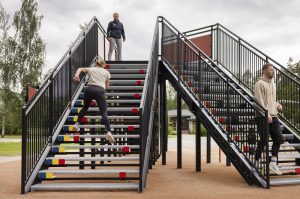
Stair climbing is an efficient cardiovascular exercise
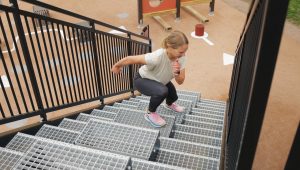
Stair climbing is widely recognised as a highly effective form of aerobic exercise. Unlike many forms of training, stair climbing simultaneously challenges both the cardiovascular system and the lower body’s major muscle groups.
Research has shown that regular stair climbing can:
- Improve cardiovascular fitness
- Increase aerobic capacity (VO₂max)
- Strengthen lower-body muscles
- Reduce risk factors for cardiovascular disease
A study by Boreham, Wallace, and Nevill (2000) found that accumulated stair-climbing exercise significantly improved cardiovascular fitness in previously sedentary individuals. Research published in Medicine & Science in Sports & Exercise has also shown that stair climbing requires high oxygen uptake and energy expenditure compared with many other everyday activities (Teh & Aziz, 2002).

Functional strength and movement in one activity
Another key benefit of stair training is its ability to develop multiple physical qualities simultaneously.
Climbing stairs requires coordinated activation of several major muscle groups, including:
- Quadriceps
- Gluteal muscles
- Calves
- Hip stabilisers
As a result, stair training improves muscular strength, muscular endurance, coordination, and balance. Research on functional training highlights the value of exercises that mimic natural movement patterns, making stair climbing a highly effective compound movement.
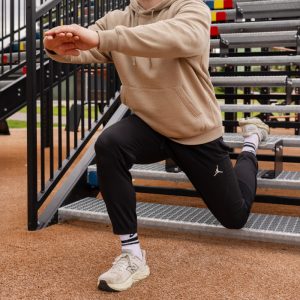
Accessible environments increase physical activity
Public health research consistently shows that access to nearby exercise environments increases physical activity among residents.
Urban planning studies have found strong links between the built environment and physical activity levels. Research published in The Lancet (Sallis et al., 2016; Giles-Corti et al., 2016) shows that cities providing accessible and attractive exercise environments experience higher levels of daily physical activity among residents.
Outdoor fitness environments are particularly effective because they are:
- Freely accessible
- Easy to use
- Available without equipment or membership
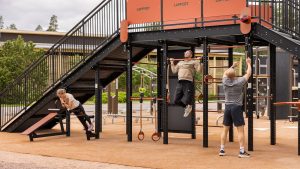
Movement environments support motor skill development
Varied movement environments support the development of motor skills.
Research in movement pedagogy highlights that fundamental movement skills form the foundation for lifelong physical activity. The pedagogical guide developed by the Sports Institute of Three Campuses emphasises that motor skills develop through interaction between the individual, the task, and the environment.
This perspective is based on ecological dynamics, which views movement learning as a dynamic interaction between people and their surroundings.
Environments that offer varied physical challenges, such as elevation, rhythm and coordination, support movement learning and long-term physical activity.
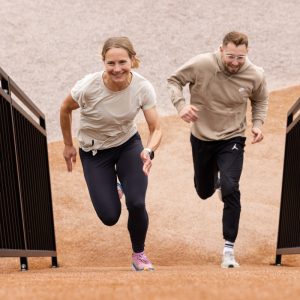
Stair training supports multiple user groups
Stair-based training environments are versatile and accessible.
Beginners may use stairs for walking climbs and light endurance exercise, while experienced users can perform interval training, plyometric exercises and strength drills.
This flexibility makes stair-based environments suitable for:
- Recreational exercisers
- Athletes
- Students
- Older adults
- Group training participants.
Urban fitness landmarks
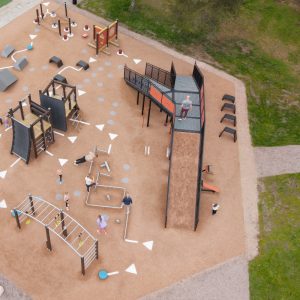
Fitness stairs can also function as visible landmarks that promote active lifestyles.
Urban design increasingly recognises the value of environments that visually communicate opportunities for movement. By combining architecture and exercise, fitness stairs can transform passive spaces into active social environments.
These spaces support both individual workouts and community-based physical activity.
Conclusion
Research from sports science, public health and movement pedagogy highlights the importance of accessible and engaging movement environments.
Stair-based outdoor fitness environments combine high training efficiency, functional movement patterns, and inclusive design in a simple structure. When integrated into parks, campuses, and urban sport areas, they can help transform public spaces into environments that naturally encourage people to move.
References
Boreham, C., Wallace, W., & Nevill, A. (2000). Training effects of accumulated daily stair-climbing exercise in previously sedentary young women. Preventive Medicine.
Teh, K. C., & Aziz, A. R. (2002). Heart rate, oxygen uptake, and energy cost of ascending and descending stairs. Medicine & Science in Sports & Exercise.
Sallis, J. F., et al. (2016). Physical activity in relation to urban environments. The Lancet.
Giles-Corti, B., et al. (2016). City planning and population health. The Lancet.
Davids, K., Button, C., & Bennett, S. (2008). Dynamics of Skill Acquisition.
Sports Institute of Three Campuses. Pedagogical Guide on motor skill development and ecological dynamics.